Iran: Low-Cost Missile Development and Production
The real problem in any conflict with Iran is not simply the quantity of missiles the country holds. The model itself features extremely low-cost development and production.

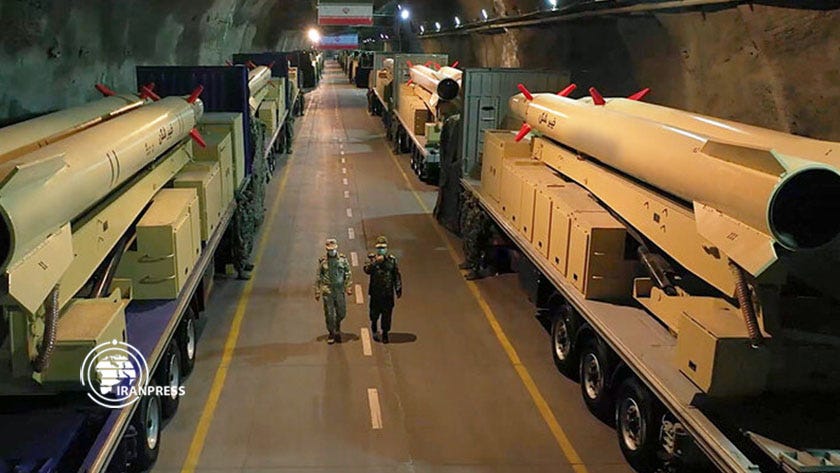
In recent years, Iran has moved to fully domestic missile manufacturing at extremely low unit costs.
One example is the Kheibar Shekan, a ballistic missile that costs around US$1 million per unit. This figure is possible because the entire production chain is state-controlled, reverse-engineered technologies have been simplified, and local labor is cheap.
Managed directly by the IRGC, the production line eliminates the profit margins of large private defense corporations that drive Western weapons costs sky-high. For a medium-range missile with terminal maneuverability and solid fuel, this is an extremely low price.
Western industries in the US and Israel simply cannot compete with this model. Their development depends on private suppliers with high profit margins. Iran centralizes all fabrication in state-controlled industrial complexes and underground bases.
The program was built and refined through reverse engineering, without the billion-dollar upfront R&D costs of original development. The entire cycle runs at low cost.
The Kheibar Shekan is a third-generation solid-fuel missile. Solid motors are cheaper to mass-produce and require far less storage maintenance than liquid-fuel systems. Iran has also shifted to lighter, lower-cost composite materials in the airframe, cutting structural weight without expensive metal alloys.
Another key feature of Iranian missiles is the electronics approach. Western missiles rely on military-certified microchips that cost thousands of dollars each. Iran has specialized in circumventing sanctions by adapting dual-use civilian electronics and commercial navigation sensors that deliver acceptable guidance accuracy at a fraction of the price.
The estimated US$1 million unit cost creates a severe asymmetry against the interceptors used to stop it. A Patriot interceptor runs US$4-6 million; a THAAD interceptor is in the US$12-15 million range per shot.
And the Kheibar Shekan is only one of these cheap missiles. The solid-fuel Zolfaghar, with a range of about 700 km, costs under US$300,000; The liquid-fuel EMAD, with a range over 1,500 km and high accuracy, was estimated by JINSA at approximately US$250,000 per unit on mass-assembly lines. Even if the real cost reaches $500,000 or higher, it remains a fraction of the interceptors needed to try to shoot it down.
The Shahab-3, the traditional backbone of Iran’s medium-range force, has modern variants costing between US$1 million and US$3 million. That is only slightly below the claimed hypersonic Fattah-1, estimated at US$2–3 million.