Suspended Attacks: Iran Has Perfected and Expanded Its Air Defense
Once again, we are facing an imprecise assessment by the US/Israel regarding the success and extent of a new phase of the war. There is absolutely nothing short-term about this scenario.

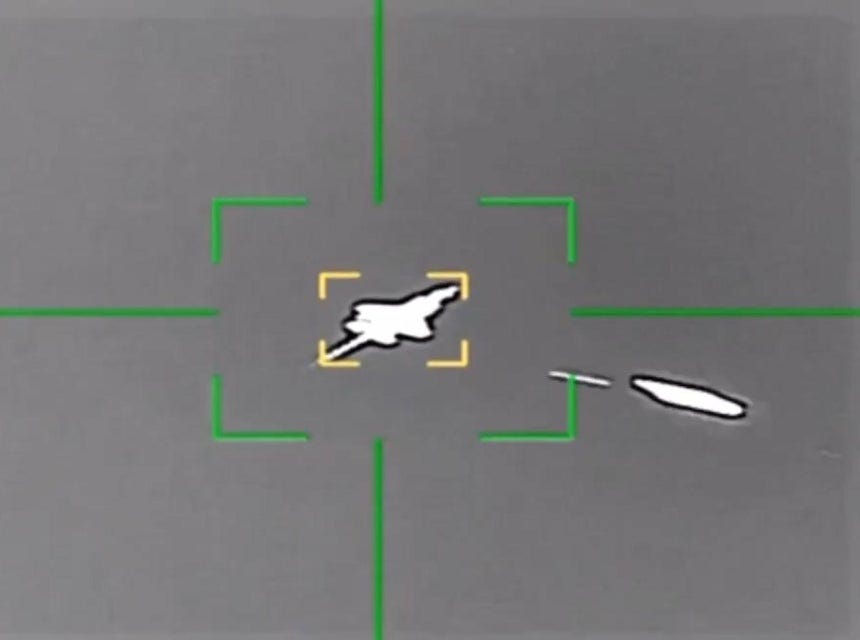
The United States today does not have an accurate estimate of the Iranian air defenses that were reformed during the ceasefire. During the las days, the media reported that Iran studied the flight patterns of American fighter jets during the nearly 40 days of war and deployed new units under a different tactical bias. Combined with the fact that the downing of several fighters during the war shows that U.S. military tactics have become excessively predictable, this gives Iran the ability to be far more efficient.
The advancement of the Iranian sensor belt is much broader and no longer simply covers the sky, it now predicts American pilot behavior: from standard entry and exit routes, operational altitudes, to aerial refueling schedules and electronic jamming patterns. Instead of merely rebuilding destroyed systems, Iran has perfected and expanded a modern air defense network with fiber optics, quantum-resistant and decentralized encrypted communications, making it far more resistant to electronic warfare.
The long-range IRST systems that Iran is deploying use cryogenically cooled sensors and benefit from the advantage of altitude. By cooling the sensor to extremely low temperatures, thermal noise from the device itself is reduced, allowing it to detect minimal heat variations at much greater distances. We are talking about a system with a base detection radius of about 15 km that can jump to detections above 50 km when installed on mountaintops. This is because positioning EO/IR sensors at high elevations places them above the densest layers of surface pollution, humidity, and dust, avoiding the main vulnerability of these systems, which quickly lose precision under adverse weather conditions such as dense fog or heavy cloud cover.
To better illustrate, this Iranian network relies heavily on non-radar technology, specifically IRST sensors. Often described as a thermal eye, these sensors continuously scan the sky for heat signatures produced by engines or airframe friction, enabling the effective detection of even stealth aircraft. Complementing this, Electro-Optical sensors function as high-definition cameras. Once the IRST identifies a heat source, the EO system utilizes optical zoom for precise visual identification. This allows operators to distinguish between enemy drones, fighter jets, and civilian aircraft, thereby mitigating the risk of friendly fire.
These integrated systems also include a third element: the laser rangefinder. It fires an invisible beam for a fraction of a second to measure the exact distance to the target, enabling the missile to be launched with surgical precision. Iran has integrated these technologies into a monitoring network known as the Sepehr variants, a series of electro-optical and IRST stations. Deployed as both fixed towers and mobile units, these stations passively scan for aircraft and drone heat signatures from dozens of kilometers away. This multispectral surveillance network comprises dozens of stations and is rapidly expanding along the Gulf coast and throughout the Esfahan province.
