The possible nuclear dimension of the war cannot be overlooked
And if Iran had not yet produced a weapon by February, after that it would have every reason to do so, and with the technology it possesses and North Korean assistance, it would be a relatively quick.

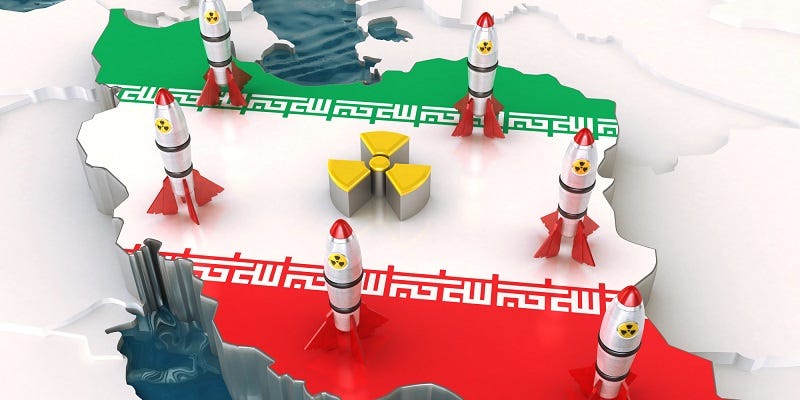
I recently wrote about the possibility of Iran already possessing a nuclear weapon and the risks that this could lead to various outcomes. One of them: ‘That would completely upend the Middle East board, starting with Saudi launching its own program, as it has repeatedly said it would do if Iran ever developed a nuclear weapon.’
But if Iran already has a nuclear weapon, why hasn’t it revealed it? The answer might lie in the fact that they are uncertain about the reactions from Israel and the U.S., who could claim the necessity of a preemptive nuclear strike.
Based on various lines of evidence, I have a strong intuition that Iran already possesses this weapon. Furthermore, the intensity of U.S. and Israeli operations, marked by nearly 900 strikes on the Natanz and Fordow complexes, suggests a deliberate attempt to trigger a nuclear disaster. This is further evidenced by four hits on the Bushehr nuclear power plant, as well as attacks on a heavy water reactor associated with plutonium production and a uranium facility in Yazd.
Iran knows it occupies a privileged strategic position, and bombs will not reverse this situation. The U.S. and Israel have few options left on this board, while political and economic pressure increases daily. This lack of alternatives may be creating a scenario where it is becoming increasingly likely that a nuclear disaster will occur.
IF that happens, Iran will likely respond by attacking the Dimona reactor in Israel, which will trigger a nuclear war, with Israel fulfilling its ‘dream’ of nuking Iran. The outcome is that this could trigger the same response from Iran, and I will explain how this would occur.
Iran’s nuclear program began in the 1950s but took on a military dimension in the 1980s-2000s through the AMAD project. U.S. intelligence assessed a formal suspension in 2003, yet in the two decades since, Iran has had more than enough time to make steady investments, longer than it took Pakistan (10-15 years).
After the U.S. withdrawal from the JCPOA in 2018, Iran sharply accelerated its efforts, and by 2025 it had the capability to produce a weapon in days or weeks.
We are talking about a country with high technological capacity that reached stockpiles of 440kg of 60% enriched uranium, which far exceeds any civilian need. The step to 90% is quick, days or weeks for fissile material. The 440 kg stockpile at 60% in 2024-2025 could yield up to 10 bombs if further enriched. The 2025 U.S./Israeli strikes on Natanz, Fordow, and Isfahan mostly hit surface facilities that have since been rapidly rebuilt, and there is a suspicion that enrichment toward 90% has continued at a new site.
If eight months ago Iran had 440kg of 60% uranium, and if enrichment continued, we would be talking about at least 550kg today. Iran operates thousands of advanced centrifuges (IR-6, IR-9) in hardened underground bunkers.
Historical documents and intelligence analyses indicate that Iran completed most of the theoretical and experimental work for a compact nuclear implosion device as early as the 2000s. Since then, Iran has independently developed highly reliable dual-use electronic and mechanical fuzing systems.
In my view, another strong piece of evidence is that Iran has built significant indigenous capacity to produce dual-capable ballistic missiles (able to carry conventional or nuclear warheads), prioritizing precision in its most modern systems. These include medium-range missiles such as Emad, Fattah, Kheibar Shekan, Khorramshahr-4, Sejjil, and several earlier-generation models that remain dual-capable.
In this context, I believe warhead miniaturization would not be a major challenge, as Iran has built a vast technological industry in recent years and has a partnership program with North Korea capable of meeting any technical demand regarding the process. Indeed, 2026 reports indicate that North Korean technicians have been working on the reconstruction of Iranian missile launch sites.
Now imagine that Iran had nine months to enrich uranium to 90%; it already has miniaturized and tested missiles, as current Iranian missiles already fly with small, aerodynamic conventional warheads; it has already mastered reentry and thermal shielding; and it possesses North Korean assistance for warhead miniaturization.
Iran may already have about 15 warheads installed on missiles and is remaining silent about it. The absence of tests is not an impediment to the manufacture of nuclear weapons. The South African program produced six warheads without any real testing and was absolutely certain they were functional. Today, Iran has much more technology to simulate processes than South Africa had 50 years ago.
I do not believe in the power of the Fatwa to inhibit proliferation when the country is under attack by two nuclear powers. And if Iran had not yet produced a weapon by February, after that it would have every reason to do so, and with the technology it possesses and North Korean assistance, it would be a relatively quick process.
The hard part of developing an N-weapon is purifying the fissile material
Bomb design itself is open source.
Crazy claim if true. Imagine if Iran already had nukes then this war makes sense. Wow. I’d be impressed but I can’t imagine.